Webex Control Hub: making global device deployment predictable for 100,000+ organizations.
IT admins only learned a rollout had failed after it failed. I redesigned device deployment in Webex Control Hub as a setup wizard that validates before anything ships.

Impact
• Defined how AI calling features show what they changed and let admins review or turn them off; 9 of 10 admins set up AI Receptionist without help. • Research moved guided setup ahead of new bulk configuration on the roadmap. • Documented a shared state pattern four product teams adopted; mentored two designers.
Scope
Cisco's IT admin platform for Webex, used by 100,000+ customer organizations worldwide.
Timeline
2024–2025
Role
Senior Product Designer · design lead across the calling, admin, and provisioning teams
The problem: thousands of devices, no safety net
Admins set up thousands of devices one at a time, with no checks until something broke. The first sign of a failed rollout was often a support ticket.

Research: three rounds of testing to find where setup broke
I interviewed 8 IT admins across 6 regions, then ran three rounds of usability testing on setup. Failed setups fell from 58% to 8%, and setup time dropped 38%.

The insight: the problem wasn't capacity, it was confidence
Speed wasn't the problem; confidence was. A faster bulk tool without validation would only have produced errors faster.

The call: validate first, even when the system is slow
Validation hit backend latency, so I worked with engineering on async checks: the screen stays responsive and each device reports its status as checks finish. AI troubleshooting went where admins already looked, inside their dashboards.
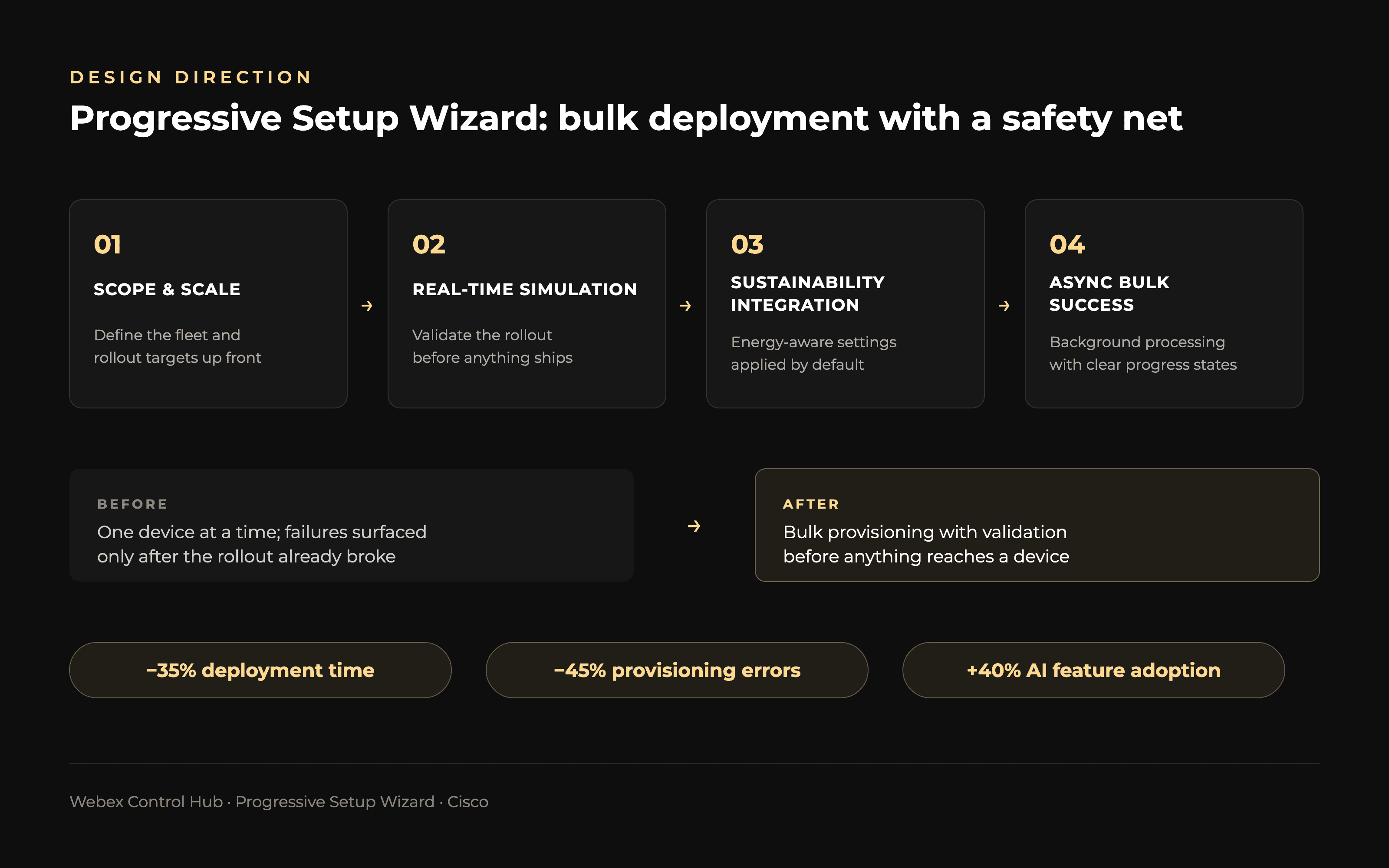
The result: a four-phase wizard admins could trust
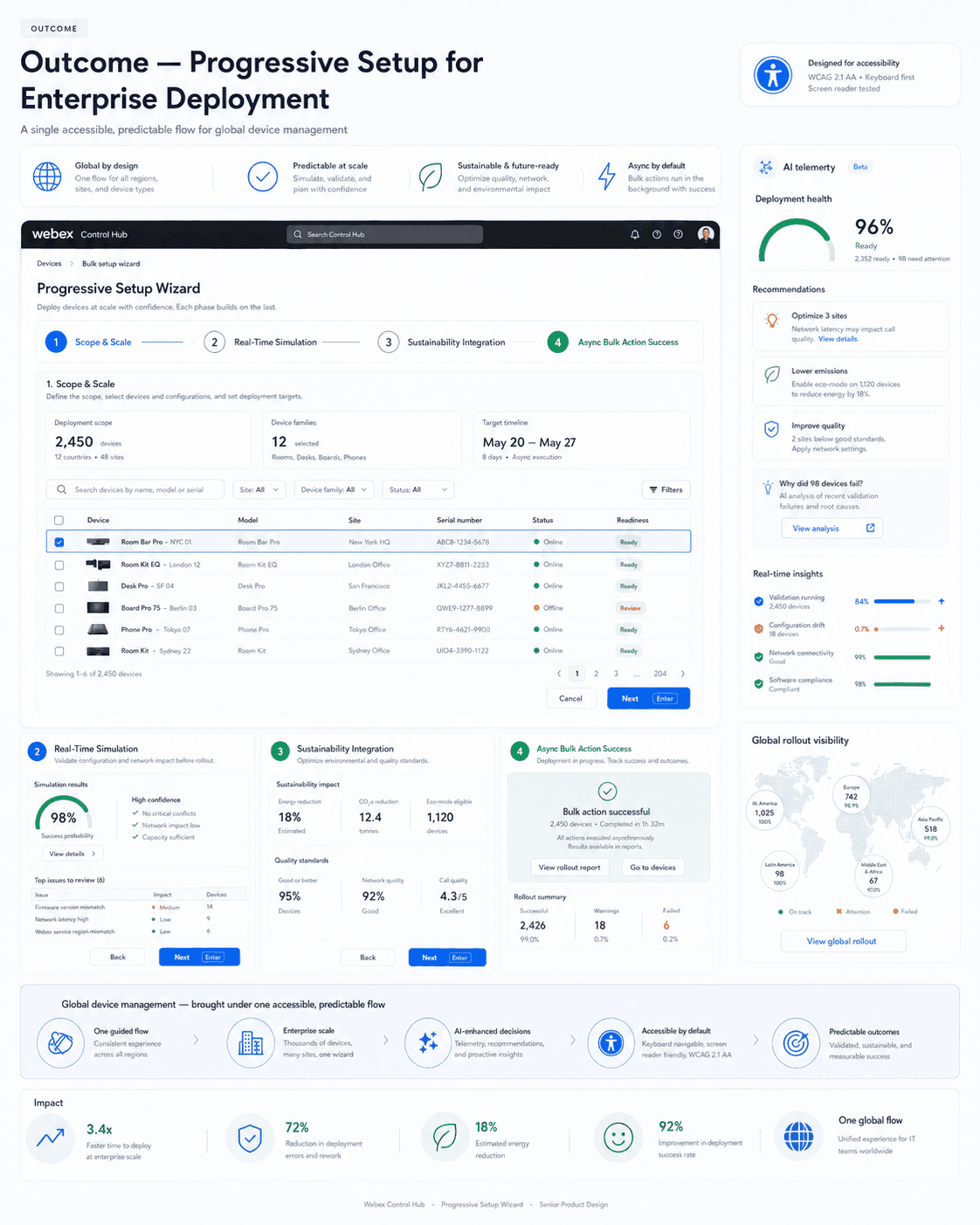
A four-phase Progressive Setup Wizard, from scoping to real-time simulation to async bulk action, built to WCAG 2.2.
Takeaways
At enterprise scale, predictability beats novelty. Being upfront with engineering about latency got us a better answer than either side would have found alone.